Thursday, December 3, 2015

Final Thoughts


Since starting on this project back in early September, Civilization 5 has been a wild ride, full of ups and downs. Initially, I was hooked to the game. I logged many hours in the first week or two of playing, a ridiculous amount. But as the semester progressed, I began losing interest in the game. I felt that once you got into your game and nearing victory, the game dragged on. Each turn took what felt like forever and the end was so close, yet so far away. I couldn't manage to build up the enthusiasm to finish the game and win, I think I'm only a couple cities away from destroying the last civ and one city state away from achieving global domination.


This game has been one of the more frustrating games I've ever played in my life. But I appreciated the frustration. This game required me to think about what I wanted to achieve in the game and the steps I needed to take to get there. My patience was also greatly tested; having to sit through some of the denunciations or ridiculous trades that other civilizations offered just ticked me off. I think some of the most frustrating things made the game so fun, yet also so annoying. It kept me guessing through out my whole playing time.

I think that the game over all did a good job of accurately portraying the different course themes we've explored over the course of the semester. Although it wasn't 100% accurate, I think that the positives definitely outweigh the negatives. There were times where the game left me scratching my head wondering what the creators were thinking in regards to history, but they deserve some praise for a good game. If the question was if I would have my students play it, it'd be a tough decision. I think that it's an okay way to get students involved in history, but I feel like there are probably better ways in doing so. I like the game, I just don't really feel that it has a place in the classroom.

That being said, I did enjoy this project and I thought it was a very interesting way to learn about history, but I'll also be happy that it's over.


Technology, Environment, Spiritual Life, and Moral Codes

The most important aspect of the game that I've yet to talk about is definitely technology and how you use it to your advantage. Technology, if your aim to to achieve global domination, is the key to success. Technology and science go hand in hand. The further you progress in the game, the more 'science' things you can develop through the science tree. If you're ahead of all the other civilizations in technology, you have a clear military advantage and should be able to easily force your will on them. Technology can be increased through trade once you get further in the game. When I'm exploring additional trading options, my main focus is usually the cash (obviously) but the second most important thing I'm looking for is the science boost that you get. Another way that you can generate more science is by getting super lucky and having a great scientist born into your civilization. We recently had a big paper to do over the book Lost Colony. One of the biggest misconceptions is that military powers from the west have almost always been more powerful than those of the east. Lost Colony debunked this theory in an example between the Dutch and Chinese. While we saw that leadership along with other factors is important in skirmishes between two warring factions, I still find it hard to overlook technology as a factor. It's foolish to think that a tank would be overtaken by a soldier armed with only a sword.

 
The environment also plays a major factor all throughout the game. When you initially start a game, you're thrown someone on the map, hopefully near a location with good resources and access to the ocean. You're faced with the decision if you want to start your civilization there, or move somewhere else. Moving forward in the game, you're encouraged to explore and kind new lands and meet other civilizations and city states. The environment is a major factor when trying to do this. Mountains, oceans, and heavily wooded areas can slow down or even completely hinder movement. On the flip side, these things could be used as an advantage in the defense of your civilization. In my first game, I set up my civilization in South America and was completely defended in the West by the Andes Mountains as well as the North by another mountain chain. I think that Civ 5 does a relatively good job of portraying the environment throughout the game. It's just like how throughout history; civilizations in North and South America have been hindered by the various environmental problems that hurt their trade and movement across their respective continents. I do however wish that there were random floods, tornadoes, hurricanes, and other natural disasters that accompany the real world. I also wish that every time you try and move far enough away from a civilization whether by sea or land, there's a chance that they get lost or some other event happens that makes them disappear from play. 
Spiritual Life and Moral Codes has definitely been the most confusing aspect of Civ 5 to me. I'm still trying to grasp the importance to the game, so bare with me. As you progress through the game you have the option to found a religion or use a religion that another civilization is already using. The same can be said for your civilization ideology. Both ideology and religion have various different bonuses that come with selecting that particular one. I really didn't do much with religion through the game; I was more focused on economics, production, and war than religion. I really only made some monuments that contributed to an increase in faith, but that's pretty much it. If you're opening a trade route with a different city, sometimes you can spread religion and influence to other civilizations and city states, but I was always more keen to look for scientific bonuses. You could also use missionaries to spread your religion by sending them over the globe to other civs and city states. I think that spiritual life and moral codes are the least accurate portrayal of historical change in this game. Throughout history many, MANY, wars and battles have been fought over religious reasons: the Crusades, Thirty Years' War, and the Eighty Years' War are some good examples. In this game, there doesn't seem to be any civilizations going after each other for religious reasons. It seems as if religion is in this game for only the minute bonuses that accompany them. 

Thursday, November 12, 2015

Society and Its Categories

Aside from warfare, there are many different ways to beating the game, whether it may be through a religious victory, a diplomatic victory, or what we'll talk about today, a cultural victory. Civilization V makes for a very intricate game whether it be through how simple things like how your citizens contribute to your civilization to how warfare works and how it's drawn out. It's kind of funny in a way how much is passed over in this game at the same time. In Civilization V, there is nothing that has to do with class, gender, family, kinship, race, or ethnicity. It seems like the whole civilization is male, being that all the people seem to contribute to the work and production while still having to produce soldiers and warriors to go into battle. It's interesting too that there are no struggles for power like in many different civilizations throughout time. You're the leader no matter what happens in your civilization. It's not like the revolts in China that stemmed from the Mandate of Heaven, apparently I'm the one and only ruler. I think this aspect of the game kind of takes away from the experience when compared to what really happened throughout history. I think the little things like race, ethnicity, and family ties are essential when looking about across history. Many wars and battles have stemmed from those very reasons.


Art is an essential part of Civilization V. Whether it be art, music, literature, or theater, they all play a big role in the culture part of the game. Every once in a while, a 'great person' will be born and you have the option to recreate their work or you can give your civilization more culture points, Whatever you chose, it'll bring in more tourists to your civilization. The rest of the world will be in awe of your paintings, music, and movies if you have a high cultural rating. There are many different building you can construct to increase your cultural rating as well, building such as the Eiffel Tower, the Sistine Chapel, or even the Sydney Oprah House. There are also many different social policies that can contribute to culture as well. I think that art is important in that it makes your civilization and your people remembered. Many works give us insight into what life was like in ancient times as well as what people were trying to convey from the past. We saw many grim paintings and works from authors that painted a vivid image of what life was like during the plague. Even before people had language, cave paintings showed us what was important to people back in the day.


Thursday, October 29, 2015

The Struggle for Power

This weeks post is all about power and politics and how it effects game play. Obviously this game is
 about warfare and conquering different civilizations, if that's the type of victory you're after, even if it not, you're more than likely to encounter someone attacking you throughout the game whether it's a rival civ or just a barbarian group. There are many other aspects that come into play through politics
and power, not just combat. As the ruler of a civilization, you have the power to implement different social policies and ideologies to fit the characteristic you want from your civilization. Those different ideologies and policies can greatly change the dynamic of the game whether it's through trade, warfare, or productivity. Another great thing you can chose to do is make alliances with other civilizations. By being allies with others, they pledge not to attack you , and many times they will send troops to support you if you are being attacked as well as many other bonuses.


A major part of the game that has frustrated me every time I've played has to do with the World Congress. Once a civilization has encountered every other civilization playing in the game, the World Congress starts, that civ that initiated the Congress gets the most representatives. By having the most representatives in the World Congress, you have leverage over the other civilizations and you are can pass things through the World Congress that'll help you out and do things to spite other civilizations. Another aspect of politics that frustrates me is public denunciations. I hate that just because warfare is a major aspect of the game, preying on all the other, weak civilizations is the smart thing to be doing and I should be receiving praise as a genius leader. A great tool that I like to utilize are the spies that you can send to other civilizations or city states. With spies, you can rig elections to go in your favor in city states casting positive influence for you and your civilization.

Whenever I'm playing I feel as if I'm Genghis Khan leading the Mongols to world domination. Although I started in India, which is close to the steppe-land, I feel as if I'm on track to doing even more than what the Mongols did. I was able to break into Africa as well as the Philippines and Japan. Just like Khan, I'm slaughtering all my opponents, I feel as if they are truly frightened of my military strength; many city states have it listed that the are cautious of my military strength. But unlike Khan, I will take over the world. Another group that I feel similar to are the Assyrians. The Assyrians were ruthless and expanded their empire greatly in their time. Another aspect to worry about is keeping your people happy. If your civilizations happiness level decreases, whether it's through starvation or whatever else, the people can revolt and leave your kingdom. This happened to China when the emperors said that they could control the weather, and with poor crop production do to the poor weather, the people revolted. So far, however, my people have been very happy and I don't think that will be a problem for me.

Thursday, October 22, 2015

Midterm Thoughts


So it's been roughly 8 weeks since initially learning about Civilization V and actually playing it. I've done well over my 20 required hours and I feel that I've done pretty well so far in the game. There are some things that I still don't know about and understand, but generally, I have a good grasp on the game and its dynamics. In this blog post I really just want to talk about my strategy, comfort level, and my feelings towards the game thus far.

Personally, my goal is to win by domination, so my strategy may not align with yours. Starting out in the game, my biggest strategic advice to give it to really just worry about yourself and your civilization until later in the game. Focus on building your resources and unlocking the different things through the technology tree before you start venturing out. Amass your wealth, defend your territory, and mind your business until you unlock the catapult. Once you have the catapult unlocked, you should have the wealth built up to start wreaking havoc on other civilizations. From there, systematically go city to city conquering your opponents while still upgrading your troops and keeping an eye on your people's happiness levels; if your people are starting to dip towards unhappy, raze the city and move on, if not keep the city and reap the rewards of your conquest.


Comfort wise, I'd say I'm 50/50. I understand how the combat aspect works and, generally, how the game works, but I'm still a little confused and need to do my research on a couple of things. First, when I have an offer from a rival civilization for luxury resources, then deny them, then try and make a similar trade to what they previously offered, they always decline. I want to be able to gather different resources for my people, but not at the unreasonable rates that the other civilizations want for them. Second, I'm very unsure how I'm supposed to support or spread a religion. I see that there are some benefits to it, but on my first run through with Persia, I never had the option to do anything extra with religion. Lastly, I'm confused as to the World Congress that is in place. In both my games by the time the first meeting of the World Congress started, I've had the largest territory, most resources, most wealth, and had "the pointiest stick," yet still I don't have the most delegates for the Congress. Then by the second meeting, again in both games, I conquered the host civilization and still didn't have the most delegates. How frustrating is that!?


Starting out in the class, I was pretty excited to play the game and I logged on a bunch of hours. Now, the excitement has kind of faded away, although I must say when I do play, I play for a while and I do seem attached to it. But largely, I'd ready to finish this last game and try and reach a domination victory. I'm pretty close to achieving domination, as I just need to wrap up my campaign in North and South America, but the further you get into the game, the longer the turns are, which makes the game even longer.

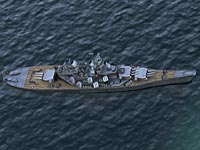
My future plans for the game are to bombard whatever coastal cities I find on the coasts of North and South America with my fleet of battleships and then work my way inland. I can't decide if I want to make peace with all the remaining city states or to just decimate them as well. Hopefully by my next blog post I'll have made the tough decision.

Thursday, October 8, 2015

A Prosperous Civilization

My civilization has grown exponentially since I last updated you. My European campaign was a great success. Attila the Hun, leader of the Hunnic Tribe, was begging and begging me for a peace treaty which I happily declined. I moved my forces into Europe and crushed the weak Huns with my mighty Chinese army within a couple of turns.


My next endeavor was to conquer Africa, but it took a little bit of time. Since I'm playing on the large map of the world, you have to think ahead as to what you want to do with your troops. By this I mean, you can have your battle ships bombarding a coastal city, but if your tank is still three turns out, you're just risking getting your battle ships sunk even though you have completely demolished the city.  On my first run through with Darius I, I didn't really think about it until the end and I've been successfully applying it this round, which is why I think I'm taking over cities more effective and efficiently. That being said, I also took out the Mayans and Siamese to gain authority over Africa. I think the key to my success, though, lies in the game difficulty level. I'm playing on the Chieftan difficulty level, and I feel that it isn't challenging me enough. I'm meeting little resistance from the other civilizations when I'm attacking their cities. The barbarians are also have been the only ones to try and attack my base. Pathetic effort on the other civiliations.

In terms of the economy, as well as with networks of exchange, I feel that Sid Meir's Civ V is very similar to that of real life civilizations. For a civilization to prosper within the game, one must have plenty of farms, luxury resources, and adequate methods of trade with other civilizations or city states. Just like in real life, if a ruler was to acquire a luxury resource to it's people, the people will rejoice and his rule will become stronger as the economy will get better. It's just like how in the 15th and 16th century when Portugal and Spain were on the forefront of the world's trade. They used their skilled merchants and the trading routes throughout the Mediterranean and later around Africa into India as an advantage and grew into substantially large empires. Food and production both play a key role in economic prosperity. The higher the food and production rates are, the more money that comes into the kingdom. Trading is essential to economic prosperity as it not only brings in money, but it also brings in points that go towards science which is a very important aspect of the game. Having strong networks and trading is good no matter what your goal is in Civ V. Trading increases relations between states as well as funds the each civilizations military. Just like in the Grand Exchange between Europe and the Americas, trade is a pivotal factor in this game. Because trade networks exchange both money and science, sciences can be made to better the civilization. 


Thursday, September 24, 2015

Strong Beginnings

Before starting this class, a friend of mine told me that we would most likely be playing a video game for class credit and that we would be talking about our experiences with it. I didn’t and couldn’t believe that we would actually be doing it, and I’m still sitting here rather shocked. I thought the game was going to be boring and super technically, but boy, was I dead wrong. This game has me hooked and I can’t wait to share my experiences with you.


So far, Civ V has really been a treat to play. I initially was randomly selected to play as Shaka of the Zulu Kingdom and played on that until I got the hang of it. I then randomly selected Darius I of Persia to and led my civilization to world domination. This time around, the civilization that will be the focus of this blog is Wu Zetian of China. I picked them because they’re one of the most militarily strong civilizations and I’d like to see if I can beat the game quicker than how I did with Darius I or Persia. The game for me allowed me to quickly adapt to the controls as well it was very easy to learn what was going on. The game placed me where India would be on a regular map, which was fortuitous of me as I’m on the coast as well as having some protection from the mountains.


There are a couple of things that don’t make much sense as I’ve been playing, however. One of the biggest things I’ve seen is that the City States for whatever reason are able to pretty much keep pace with you technologically while most of the other civilizations struggle to keep pace. It’s frustrating to see that it could take me maybe 8 turns to wipe out 3 of the Huns cities; one of them was their capitol city, to the north of my civilization, but the city state I attacked shortly after easily handled my attack. My other main issue is the willingness of other civilizations to quickly denounce you for taking over a city state or even another civilization. A civilization denounced me after capturing a couple of cities controlled by the Huns; that same civilization was at war with the Huns as I was doing this! It’s tough to form alliances when other, less dominant civilizations are talking behind your back!


In Sid Meier’s Civilization V, one of the key elements it has to deal with the patterns of population. Population is a tricky subject because it can be both good and bad for your civilization. If you’re keeping your towns people happy through luxury resources and building things to keep them occupied such as coliseums and sports stadiums, you’re doing well. However, if you’re not tending to the common people’s needs, they’ll become unhappy and as a result, productivity of your civilization will be down. From what I’ve seen, populations will no decrease which is kind of upsetting. I think it’d be interesting to have some kind of random event that can wreck a city thus causing you to change strategies to balance back. A random event like a plague that potentially affects all the other civilization that you’re competing against or maybe an earthquake that is region specific would be interesting to see. Other ways I can alter population and happiness rates are though social policies, trade, what I unlock through the tech tree, religion, and finding Wonders of the World.

So far I’m happy with the progress my empire has made towards total world domination. My next step will be a campaign to eradicate the Huns out of Europe as well as whatever other city states are there. After that I’ll likely build my forces up for a large African campaign that should be very successful.